
Gibsonburg Court Docket Searches
There is no Gibsonburg-specific public search database. Begin with the issuing-court line printed on the ticket or paperwork. If it names Mayor's Court, call the village. Ask whether the matter has been set, paid, resolved, or transferred. If it names County Court, Common Pleas, or another court, take your Gibsonburg court records search to that court. Use that court's own search tools and clerk instead.
- Read the court name, citation number, and date printed on the Gibsonburg ticket or notice.
- Use the Mayor’s Court inquiry channel when the ticket identifies Gibsonburg Mayor’s Court.
- Ask whether the Gibsonburg matter remains there or was transferred to a court of record.
- Use the Sandusky County Clerk Record Search only after County Court or Common Pleas routing is confirmed.
- Request an official Gibsonburg-related copy from the court that retained or received the case.
An empty county result proves little. The Gibsonburg case may sit in Mayor's Court, a transfer may not have posted yet, the matter may belong to a different court, or the record may be restricted.
Gibsonburg Mayor’s Court Is the Starting Source
The official Gibsonburg Mayor's Court ordinance is where the local authority lives. It lets the Mayor's Court hear prosecutions for municipal-ordinance violations plus criminal causes involving moving traffic violations on state highways within the corporate limits, all subject to the ordinance's jury-trial and impartial-magistrate rules. The ordinance explains the Gibsonburg court channel. It does not offer a live case lookup.
| Gibsonburg channel | What is known | Proper next step |
|---|---|---|
| Mayor’s Court ordinance | Defines local authority and transfer rule. | Use it to identify the possible court path. |
| Village or court inquiry | Needed when a ticket identifies Mayor’s Court. | Ask where the citation and setting are held. |
| County Clerk Record Search | Potential web fallback for receiving County Court or Common Pleas case. | Use after routing is confirmed. |
The village publishes no phone number, fee schedule, court-day calendar, payment portal, or search form for its Mayor’s Court. A Gibsonburg court records page should say that plainly rather than guess.
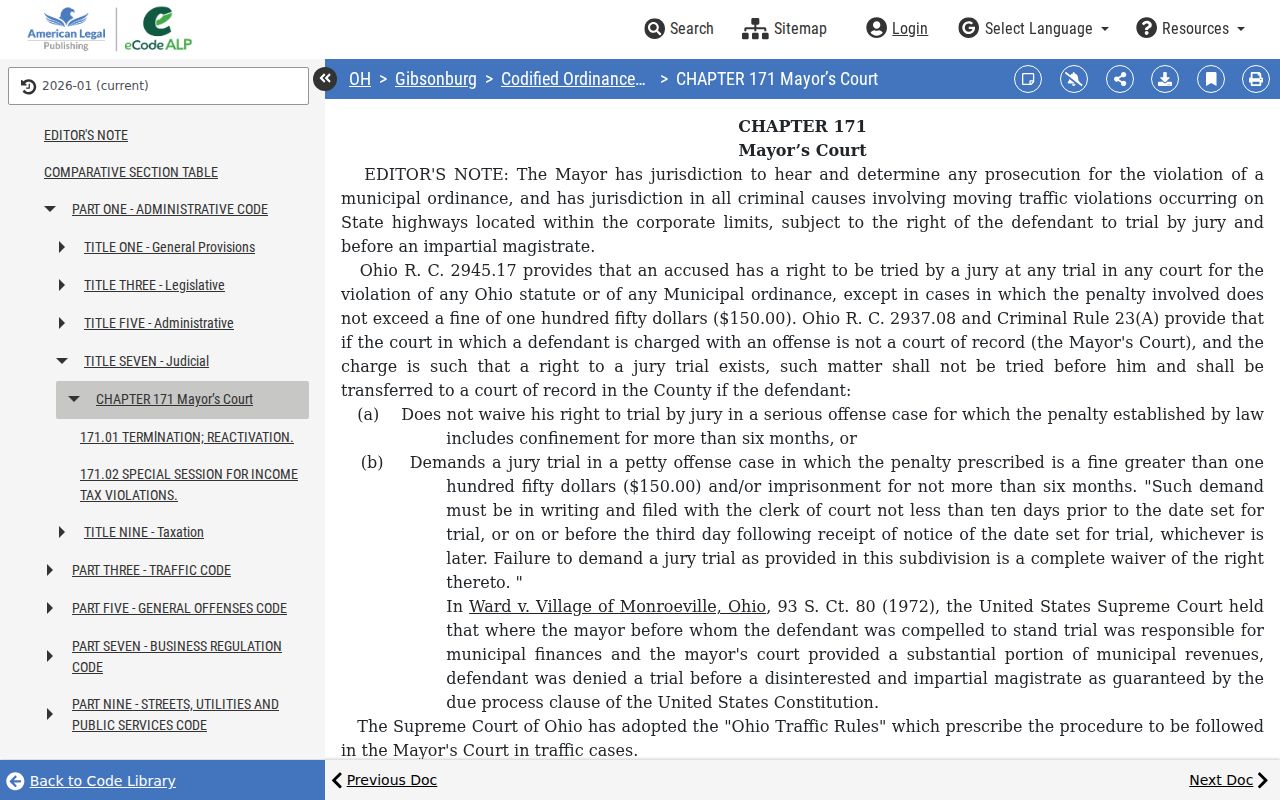
The ordinance image names the Gibsonburg court authority. It does not promise a live case lookup.
Inside the Gibsonburg Mayor’s Court
Gibsonburg is a village of about 2,452 people, per the 2020 Census. It has no municipal-court portal of its own. Its Mayor’s Court handles village ordinance cases along with certain moving traffic matters. That makes it a distinct channel from Fremont Municipal Court. It is also separate from Sandusky County Court District No. 2 in Woodville. Being in the same county does not make those courts the right stop for a Gibsonburg docket. For a current Gibsonburg court date, ask the court that actually holds the record.
Gibsonburg Jury-Right Transfer Rule
The Mayor’s Court ordinance says the court is not a court of record. That matters here. A matter requiring a jury trial cannot be tried there. It must go to a court of record in the county when the statutory or rule conditions apply. This is the most important Gibsonburg record-routing fact. The court that receives the transfer becomes the source of the later court record. The Mayor’s Court ordinance does not hold that role.
- Mayor’s Court
- A local court channel authorized by Gibsonburg’s ordinance for the stated ordinance and traffic matters.
- Court of record
- The receiving court for a Gibsonburg matter that cannot be tried in Mayor’s Court because the jury-trial rule applies.
- Transfer
- The movement of a Gibsonburg case from the Mayor’s Court channel to the court that will maintain the next record.
- Appeal layer
- The Ohio Sixth District Court of Appeals may be relevant where an appeal lies from the appropriate court record.
After a confirmed transfer, rerun the Gibsonburg court records search under the receiving court's name and rules.
Finding Gibsonburg Court Dates
The Mayor's Court publishes no calendar or court-day schedule. Your first source for a Gibsonburg court date is the citation or notice itself. Follow that with a direct inquiry to the village or court named on it. If that inquiry confirms a County Court or Common Pleas transfer, move to the County Clerk Record Search. Then call the receiving court's direct line. Do not swap in Woodville's weekday schedule for a Gibsonburg setting.
| Date | Use the date printed on the Gibsonburg citation or written notice, then confirm with the record-holding court. |
|---|---|
| Time | No published Gibsonburg Mayor’s Court time schedule was located. |
| Location | Ask the village or court named on the citation; do not infer a venue from nearby county courts. |
| Judge or magistrate | Confirm through the actual Gibsonburg-related court channel. |
| Setting Type | The citation and court inquiry identify whether the matter is an ordinance, traffic, or transferred case. |
No web calendar appears for Gibsonburg, so confirm your date directly with the court. A missing online listing says nothing about the case itself; it is not a sign of dismissal.
Gibsonburg Empty Record Search Results
A Gibsonburg county portal result can come back empty for several local reasons. The citation may still sit in Mayor’s Court. The ticket may identify another issuing court. A transfer may not yet be visible, or the record may be restricted. The County Clerk’s Record Search covers County Court traffic and criminal records. It also covers Common Pleas categories. So it does not promise a search result for every Gibsonburg village matter.
Gibsonburg routing rule: identify the court on the citation before treating an empty online result as proof that no court record exists.
Once an inquiry confirms a County Court case, search the county Clerk form by Last Name/Company, an optional First Name, a date range, or a case number. If time is short, call a court clerk for the follow-up.
Gibsonburg Traffic Ticket Lookups
Gibsonburg traffic court records may follow the Mayor's Court channel for the ordinance's specified moving traffic matters. The village offers no online citation lookup or payment portal. Ask first whether the ticket sits in Mayor's Court, has been transferred, or names County Court or another receiving court. The court listed on the ticket owns the next step. Keep a Gibsonburg court record separate from an Ohio BMV driving record. The court's file covers the citation, court date, plea, payment or appearance, and disposition. The BMV holds the state licensing file. For venue distinctions, see Sandusky County Traffic Court.
Gibsonburg Citation Inquiry Before Payment
Gibsonburg publishes no Mayor’s Court payment procedure, fine schedule, or administrator contact. So do not assume a neighboring court’s online payment page covers your ticket. A citation inquiry tells you which court holds the record. It also shows where the matter now sits. It reveals any transfer, plus the payment or appearance steps that truly govern your case.
- Read the Gibsonburg citation for the issuing court and court date.
- Ask the village or court whether Mayor’s Court retained the citation.
- Ask whether the Gibsonburg matter was transferred to a court of record.
- Use only the payment or appearance route supplied by the court that holds the case.
Facing a failure-to-appear or a license block? Begin with the court that issued or reported the action, not with the state. The Ohio BMV keeps the separate state-side record.
How Gibsonburg Cases Reach the County
A Gibsonburg Mayor’s Court matter can move to a court of record once the transfer rule applies. The destination is often a Sandusky County court. Confirm that receiving court instead of presuming it. After a transfer, the case lives under that court’s clerk, docket, and access rules. Appeals follow the standard record path. When an appeal lies, the Ohio Sixth District is the regional appellate layer.
Docket flow: Gibsonburg Mayor’s Court inquiry › confirmed court of record › Court of Common Pleas or other receiving court
The county Clerk Record Search helps only after a case lands in a covered County Court or Common Pleas category. A Gibsonburg local ordinance record does not become a county database entry on its own.
Gibsonburg Mayor’s Court and County Court Are Different
Gibsonburg Mayor’s Court and Sandusky County Court District No. 2 play different local roles. The village ordinance creates the Mayor’s Court authority. Woodville County Court District No. 2 is a county court. It has its own territory, Clerk Record Search coverage, and counter. So check the issuing court first. Treating a Gibsonburg ticket as a Woodville case can send your request to the wrong place. It can also route your appearance there by mistake.
| Record question | Gibsonburg Mayor’s Court | County Court route |
|---|---|---|
| Public web portal located? | No official live Gibsonburg portal was located. | County Clerk Record Search covers listed County Court traffic and criminal records. |
| Local authority | Village ordinance and specified traffic matters. | County-court jurisdiction in its territory. |
| Next action | Village or court inquiry. | Use the clerk search and direct court confirmation. |
Who Can See Gibsonburg Court Records
Ohio’s court-record access rules govern Gibsonburg court records. Still, the path to any record depends on which court holds the matter. A Mayor’s Court request goes to the local record keeper. A transferred record goes to the receiving court’s clerk. Sealed records never appear in an ordinary public search. Protected identifiers, juvenile material, and other restricted information stay out of it too.
Key Rules:
Ohio Revised Code 149.43 addresses inspection and copying of responsive public records, subject to exceptions.
Ohio Rules of Superintendence 11.09 through 11.14 provide the court-record public-access framework and restriction process.
Ohio Revised Code 1901.20 describes municipal-court jurisdiction for traffic, ordinance, misdemeanor, and preliminary felony matters, which helps distinguish local court routes.
Ohio’s municipal-court jurisdiction statute is the manifest source for the local court-jurisdiction context.
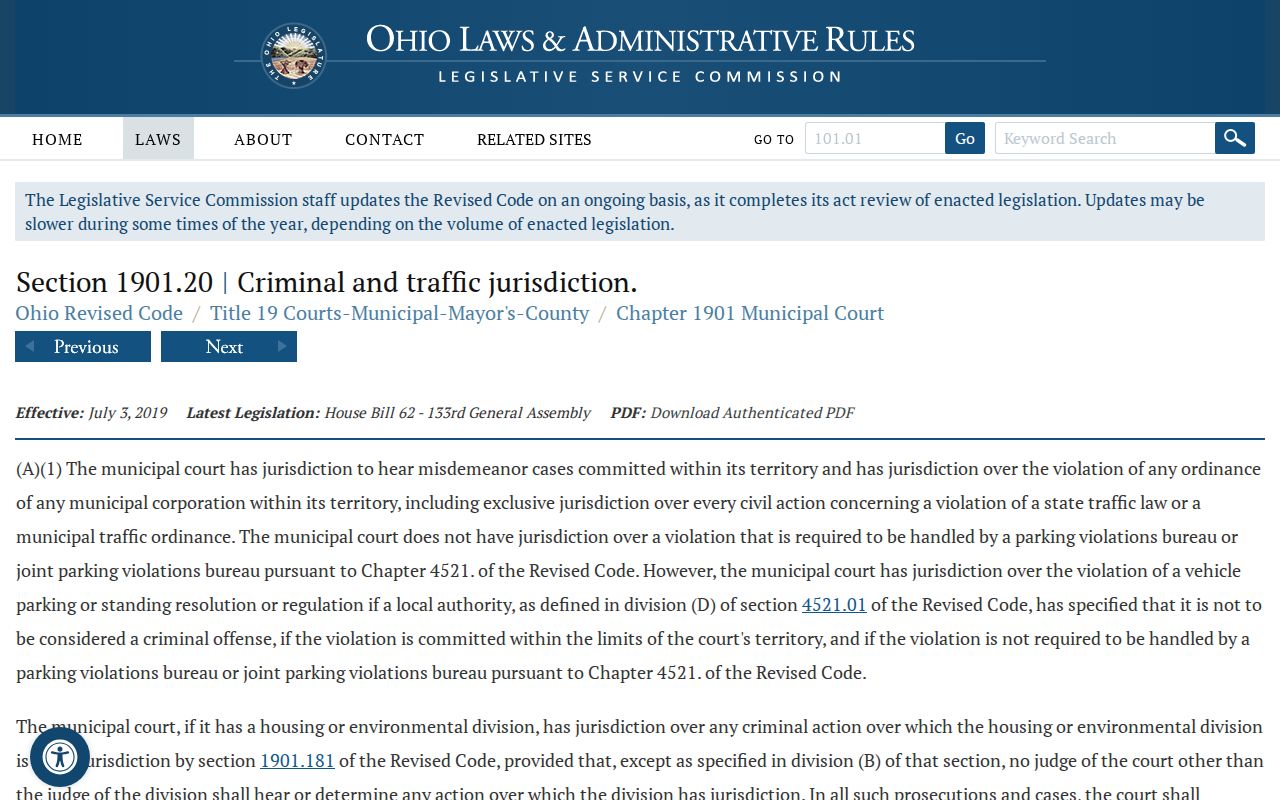
The Ohio jurisdiction source explains why the issuing court and the transfer destination decide where a Gibsonburg record sits. Start there when a record seems missing.
Gibsonburg Court Inquiry Is Not a Web Portal
When the citation names Mayor’s Court, Gibsonburg court records call for a direct local inquiry. The village offers no official public case-search portal. It posts no Mayor’s Court schedule. It also lists no fee list, direct court number, or online payment route. Trace the record through the actual issuing court, then. Guessing at a website or borrowing a nearby court’s system leads nowhere.
A village or court inquiry can settle three things. It shows whether Mayor’s Court kept the matter. It shows whether it sent the case to a court of record, and which clerk holds the Gibsonburg docket now. The record search then follows that confirmed court. That limit is actually helpful. It stops you from routing a Gibsonburg citation to the Woodville, Fremont, or Bellevue channel without proof. You need proof one of those courts owns it.
Gibsonburg Record Search After a Transfer
After a Gibsonburg inquiry confirms a transfer, the receiving court sets the next search path. A Gibsonburg County Court or Common Pleas matter fits the Sandusky County Clerk Record Search. That holds when it falls inside the published coverage. A record still with Mayor’s Court needs that local channel instead. Confirm the transfer destination, the case number, and the current setting first. That order keeps your Gibsonburg record search tied to a real court docket. It also keeps it away from a promised portal.