
Name-Based Case Searches
When the case number is unknown, search by name. The Sandusky County Clerk Record Search reaches Common Pleas civil and felony criminal files. It also covers domestic-relations cases, appellate matters, certificates of judgment, and County Court traffic and criminal records. Type a last name or company name first. Add a first name only when it will narrow things down. The county form also lets you pair a name with a date range. That helps with common surnames.
- Identify the court named on a notice, citation, or filing before searching.
- Use the county search for Common Pleas and County Court matters, then enter a last name or company name.
- Add a first name or a complete date range in mm/dd/yyyy format when the result set needs narrowing.
- Save the case number, court, and latest visible event, then confirm a time-sensitive setting with the court that owns the case.
| County search field | Type | Required | Published use |
|---|---|---|---|
| Last Name/Company | Text | No | May be used with first name or date range. |
| First Name | Text | No | Optional with a last name. |
| Start and end dates | Text dates | No | Both dates are needed for a date-range path. |
| Case Number | Text | No | Use instead of the name/date path for a focused search. |
Note: The county form offers alternative search paths rather than one statewide index, so keep each search focused on a single route.
Sandusky County Docket Court Selection
Sandusky County runs no single portal for every local case. The Clerk Record Search is the county-level route. Fremont Municipal Court and Bellevue Municipal Court each keep their own CaseLook systems. Fremont covers the City of Fremont, Ballville Township, and Sandusky Township. Bellevue's territory includes York Township in Sandusky County. County Court District No. 1 in Clyde plus District No. 2 in Woodville rely on the county clerk path for the records they cover.
A citation or court notice is the best clue. Use it when you are unsure of the venue. The Ohio trial-courts directory shows why the local structure matters. Common Pleas, municipal courts, county courts, and a Mayor's Court are separate channels. If the issuing venue is Gibsonburg Mayor's Court, that court posts no online case lookup. Ask the village or the court which channel holds the citation and whether it was transferred.
The Ohio trial-courts directory lays out each of these court channels on the official page.
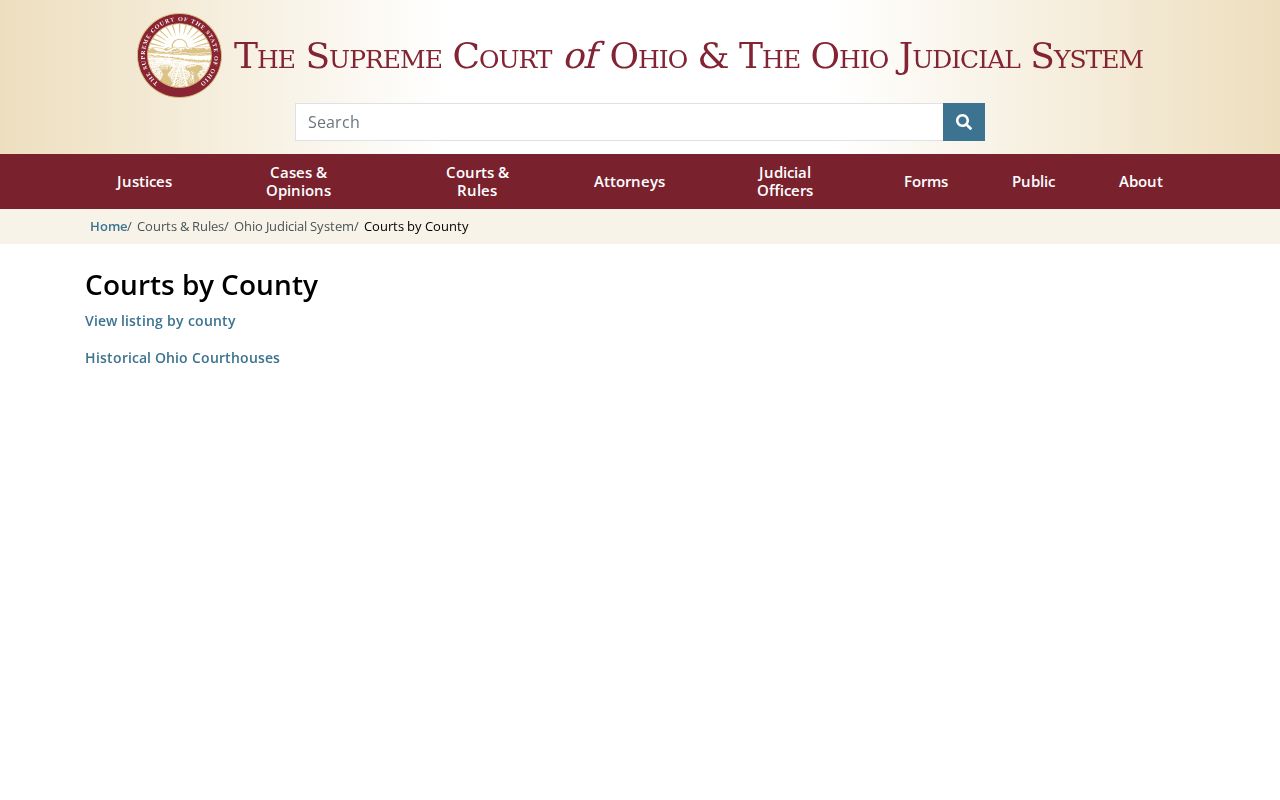
Keeping the court levels straight keeps a county result from masquerading as a Fremont or Bellevue case search result.
Case Number Searches
On the county clerk form, a known number is the fastest route. The clerk's published instruction describes a criminal convention of filing year, CR, and case number. Partial values are allowed. Its own example: entering 99 pulls up CR cases from 1999. Treat that as a portal convention only. It does not prove that civil, traffic, domestic-relations, or older records follow the same pattern.
Fremont CaseLook plays by different rules. Its Case Number field takes numbers only, no letters. Its page asks you to search one criterion at a time. A ticket number also works there for a local traffic case. Without a number, fall back on the court-specific name or hearing-date search. Do not force a county number into the municipal form.
Sandusky County CaseLook Docket Rule
Fremont's public CaseLook form is built differently from the county clerk's. Accept the disclaimer first. Then pick a single criterion: name or company, hearing date, case number, file date, or ticket number. Traffic, Criminal, Civil, and Small Claims case types come checked by default. The form also requires a CAPTCHA. It offers 25, 50, 100, or 250 matches per page. The official Fremont search form documents these fields and controls on the court's own page.
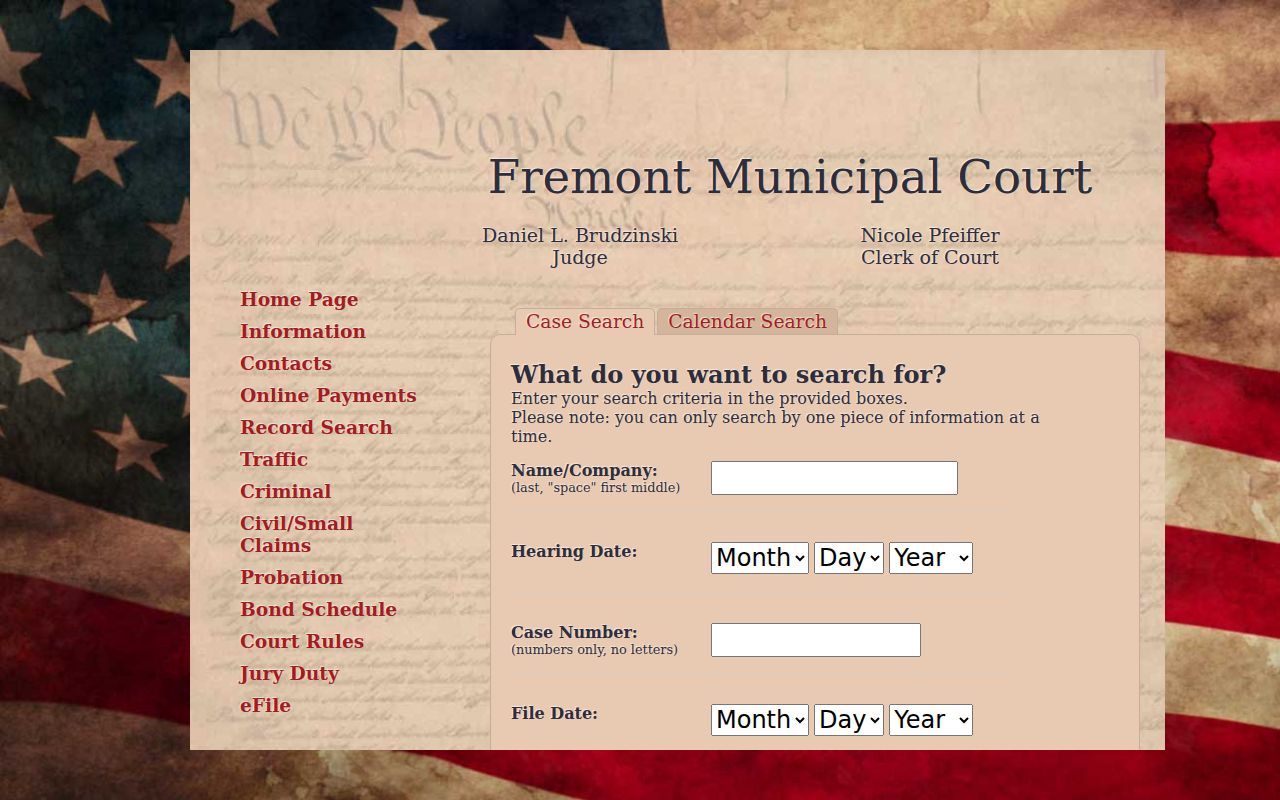
One field at a time is the court's stated rule. Searching that way also avoids mixing criteria the interface does not promise to combine.
Case Search Results Explained
Every court displays results a bit differently. Expect a docket screen to hold identifying and chronological details: the case number, the court, party roles, filing information, entries, settings, and disposition. Open the actual court screen to see which fields a particular division shows. Remember what a result is not. A web result is public information, never evidence and never a certified copy.
| Case number | The unique identifier used to return to the correct court and clerk. |
|---|---|
| Court | The division or venue that holds the file and confirms a setting. |
| Caption or roles | Case style or party roles where the portal displays them. |
| Chronology | Visible filings, events, or entries in date order. |
| Setting or disposition | A displayed hearing event or outcome, subject to later court action. |
The Common Pleas Court's own case-information page points local searchers to the Clerk Record Search, confirming the clerk's portal as the county route for those court records.
Sandusky County Docket Posting Limits
Fremont and Bellevue both post the same warning. Web information can trail filings or judicial action by at least 24 hours or longer. Fremont adds that records before 1992 must be requested straight from the court. So a blank result has many possible causes. The wrong court, a posting delay, a historical limit, a case category that is not online, or a restriction. It does not mean no court file exists.
For a recent Fremont matter, wait out the stated update interval. Then call the court if the date matters. For a pre-1992 Fremont file, use the direct-request route. County clerk results deserve the same caution. When a court appearance is near, check the docket against any later mailed order or notice.
Sandusky County CR Docket Number Tips
The clerk's partial-year example works for one purpose. It retrieves a cluster of CR cases when you only have part of a Sandusky County court docket number. Nothing more. Treat it as a criminal-docket convention, not a universal rule for every local case type. Keep the court name attached to any partial result. That way, a later records request reaches the right clerk the first time.
Fremont has its own portal quirk. The municipal form takes numbers only. So leave the letters CR out of its Case Number field. That is a quirk of the form, not a disagreement between the courts.
Two Ways to Search: County and State
Ohio has no single statewide search for trial-court dockets. The Supreme Court of Ohio Public Docket exists, but it covers only Supreme Court cases. For a Sandusky County trial-court matter, start with the local clerk or municipal portal. That is the right first stop. Statewide tools can help you spot which court system holds the file. They cannot replace the local docket search that actually pulls the public record.
| Search layer | What it covers | Best use |
|---|---|---|
| Sandusky County Clerk Record Search | Listed Common Pleas and County Court categories | Known county-level case or name/date path. |
| Fremont or Bellevue CaseLook | That municipal court’s local records | Municipal case, hearing-date, or Fremont ticket search. |
| Ohio Supreme Court Public Docket | Supreme Court cases | A case actually before that court, not local trial-court searching. |
Sandusky County Docket Public Information
The county clerk labels its online docket information as public information only. Need a certified copy? Go to the clerk's office at the individual court that handled the case. The screen is fine for locating a case and its court. Yet it is not official proof of a filing, judgment, or court date. When the official record matters, ask the originating clerk for the appropriate copy.
The Common Pleas case-information source links to the clerk's docket search. It shows how the court routes visitors there.
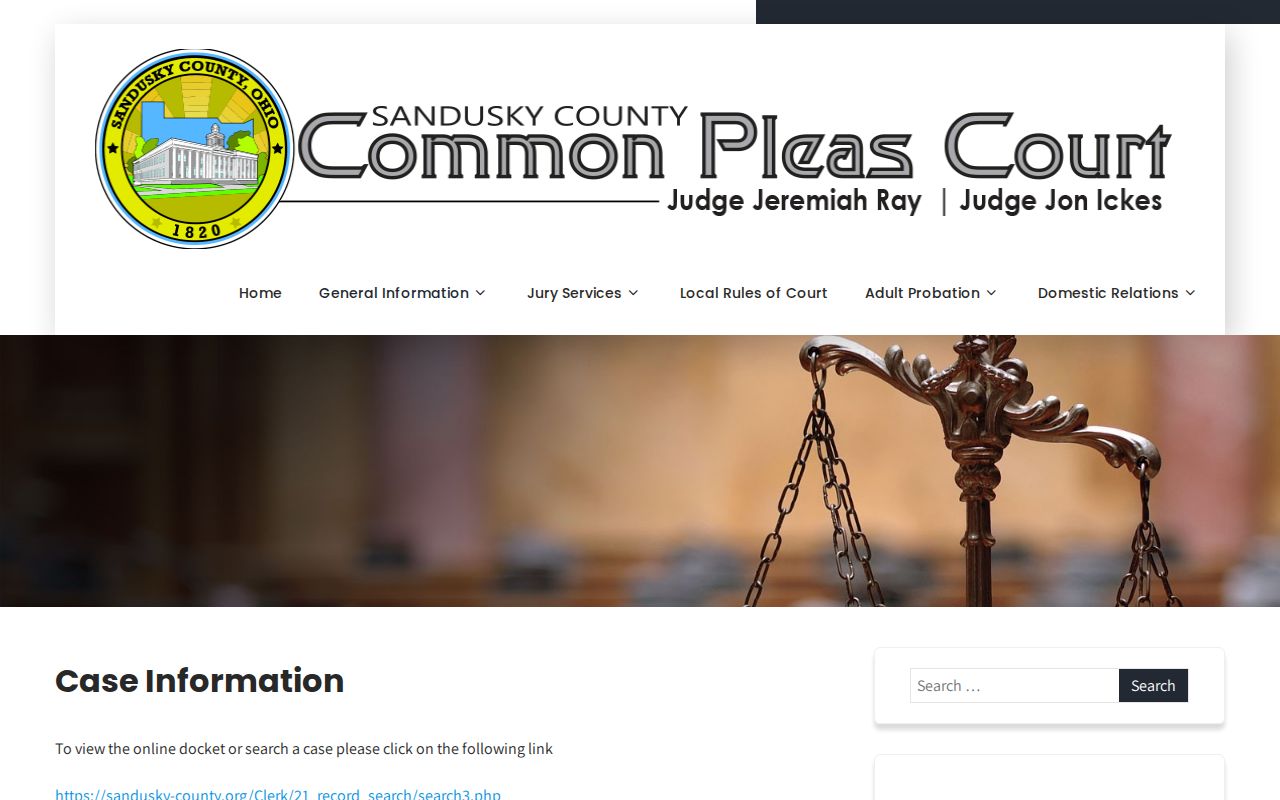
The notice keeps the lookup tied to the court and clerk that maintain the record.
Sandusky County Docket Result Choices
Fremont CaseLook offers four result counts: 25, 50, 100, and 250 matches per page. Picking a bigger number only changes the display. It never changes which court owns the case. Because a broad name search can pull many court records at once, narrow it with the court's case-type filter, or search by case number, ticket, hearing date, or file date when the portal supports it.
Focused search: Fremont’s court asks users to search one criterion at a time. A known ticket number or a numbers-only case number is usually more specific than a broad name entry.
Which Cases Stay Restricted
Some Sandusky County court records stay off the public docket. Civil Protection Order and Civil Stalking Protection Order dockets are expressly unavailable through the county Record Search. For those, the clerk sends callers to 419-334-6161. Juvenile records may be confidential under Ohio law, including juvenile probation records. Sealed or expunged matters and protected personal identifiers can also be missing. Anything a portal chooses not to publish can be missing too.
Ohio's Rules of Superintendence balance public access with procedures and limits for restricted court records. So when a docket search comes up empty, ask the court or clerk about the correct access route. Do not assume anything about the case itself.
Sandusky County Case Search Verification
Treat a web result as a starting point. It identifies the case. For anything urgent, confirm with the court that keeps the file. The county clerk calls its search public information only. Both Fremont and Bellevue warn that postings can lag behind real court activity. A clerk request is the right next step for a certified copy or a verified municipal record. It also works for a file the portal does not show at all. That one call keeps a Sandusky County case search anchored to the actual court record instead of an unverified screen.
Sandusky County Docket No-Result Steps
Start by confirming which court issued the case. Then ask whether the record is recent or historical. It may be restricted, or simply outside the portal's stated coverage. From there, use the direct clerk line or counter for the court that owns the matter. That order accounts for the county clerk's protection-order limit. It also covers Fremont's pre-1992 cutoff and the municipal courts' posting-delay warnings. A no-result is a routing problem to solve with the court. It is not a finding about whether the case file exists or what it means.